MFA recovery social engineering protection

December 31, 2025

by Kelsey Jones

Understanding the Need for Enhanced Identity Verification in AI Threats

Have you ever questioned the authenticity of a message received via email or during a video call? With technology evolves, threats such as AI-driven deepfake and social engineering attacks are becoming increasingly sophisticated. These threats not only compromise personal identities but also pose significant risks to organizations, particularly in mission-critical sectors. It is crucial for stakeholders like Chief Information Security Officers (CISOs), Chief Information Officers (CIOs), and IT professionals to prioritize robust identity verification systems to safeguard their digital.

Evolving Digital Threats

It is no longer just about stopping spam or filtering malicious links. Attackers now exploit AI to create realistic impersonations, making it challenging to discern between legitimate communications and fraudulent ones. These multi-channel threats—spanning email, SMS, social media, and collaboration platforms—require proactive measures. Although 95% of organizations utilize AI for protection against cyberattacks, over half admit they lack comprehensive strategies for social engineering defense.

The emergence of deepfake technology has added another layer of complexity. Unlike traditional cyber threats, deepfake fraud leverages AI to impersonate individuals in sound and vision, making it increasingly difficult to trust digital interactions. Emphasizing identity-first prevention is essential. A robust identity management system can prevent these attacks at their source, providing security professionals with peace of mind.

Real-Time Identity Verification: A Necessity, Not a Choice

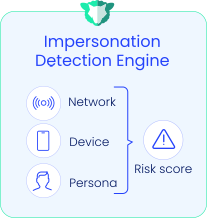
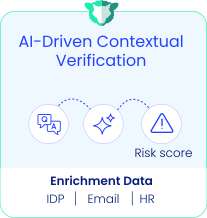
The importance of real-time identity verification cannot be overstated. By adopting a dynamic, context-aware approach, organizations can instantly block fake interactions at the point of entry. This involves utilizing holistic, multi-factor telemetry rather than merely focusing on content filtering.

  • Immediate detection of malicious activity across platforms like Slack, Teams, and Zoom.
  • Seamless integration with existing workflows, which minimizes disruptions and the need for extensive employee training.

A privacy-first approach, characterized by zero data retention, ensures that organizational data remains secure, promoting confidence in digital interactions. In cases of wire fraud, such proactive measures have prevented losses of hundreds of thousands of dollars, which underscores the value of such technologies.

Preventing Social Engineering and Deepfake Attacks

Social engineering attacks manipulate human interactions to access confidential information. Attackers may trick individuals into divulging sensitive data or gaining unauthorized access to systems. Preventive measures are critical, particularly for professionals in sectors like finance and healthcare, where data integrity is paramount.

Real-time identity verification stops these attacks at their entry point. By intercepting AI-generated impersonations before they compromise internal systems, organizations can significantly reduce financial and reputational risks. Notably, strategies such as multi-factor authentication (MFA) are fundamental, providing an additional security layer to deter unauthorized access.

Adapting to AI Threats

With threats evolve, so must defense mechanisms. A key feature of effective identity management solutions is their ability to adapt continuously to emerging AI threats. Imagine a solution that updates itself to counter new deepfake mechanisms, thus ensuring lasting protection. This capability is not futuristic but imperative in maintaining organizational security.

Moreover, the integration of such solutions into existing systems should be seamless. By avoiding the need for complex installations or lengthy registration processes, organizations can adopt new technologies efficiently. Solutions like no-code, agentless deployments, and native connectors with tools like Workday and Greenhouse exemplify how modern security solutions should be.

The Role of Multi-Factor Authentication (MFA) in Securing Access

MFA is a cornerstone of contemporary security practices, offering enhanced protection against unauthorized access. Yet, attackers often target MFA systems with sophisticated MFA reset attacks. This highlights the need for secure MFA recovery protocols, ensuring that even if one factor is compromised, the system remains secure.

Appropriate authentication methods must evolve alongside threats. The correct configuration of MFA can mitigate risks associated with identity breaches, providing a safety net against unauthorized access attempts.

The Imperative of Trust in Digital Interactions

When characterized by AI-driven deceptions, restoring trust in digital communication is vital. Organizations need the capability to confidently verify the identity of individuals, whether during virtual meetings or within email exchanges. This trust is not merely about verifying who someone is; it’s about enhancing overall security posture.

The anxiety around distinguishing between real and fake interactions can be alleviated by adopting strategies that ensure “seeing is believing” once again. A robust identity verification system plays a pivotal role in making this possible, restoring confidence in digital interactions.

Securing Critical Business Processes

The risks associated with identity threats extend beyond mere financial loss. They impact core business processes such as hiring and onboarding. With deepfake candidates emerging as a threat, securing the recruitment process is crucial. Furthermore, validating access for third parties such as vendors and contractors can prevent insider threats and supply chain risks.

By integrating security measures at every touchpoint, organizations can protect their operations from the outset, preventing potential breaches before they occur.

With AI-related threats continue to advance, maintaining the integrity of identity verification systems becomes increasingly important. Organizations that prioritize proactive, real-time security measures stand a better chance at defending against evolving threats. Leaders across industries must recognize the need for dynamic solutions that not only protect but also restore trust in digital interactions, ensuring a secure and reliable foundation for conducting business.

Exploring the Future of Identity Verification in AI-Driven Threat Management

Have you ever wondered how secure your organization’s identity verification system truly is? While artificial intelligence (AI) advances, so do the threats and vulnerabilities associated with it. With digital security is rapidly changing, bringing to the forefront complexities that were once unimaginable. A pivotal component in navigating these challenges is identity verification, which has transcended traditional methods and now necessitates a proactive, multi-layered approach to safeguard against AI-driven threats.

Understanding Identity Verification’s Evolving Role

The importance of identity verification cannot be overstated. With the integration of AI in everyday processes, the risk of sophisticated impersonations has surged, making reliable verification essential. These threats tend to exploit trust—as seen with social engineering where individuals are deceived into divulging sensitive details. Here, identity verification acts as a bulwark, employing advanced technologies such as multi-factor telemetry to filter and authenticate every interaction across channels, from email to video conferencing platforms.

Comprehensive Security Requires Strategic Adaptation

Organizations cannot afford to be complacent with old security measures. Instead, strategies must be adaptive and forward-thinking. The traditional static defenses are no longer effective against AI-empowered threats, which continually evolve, crafting ingenious methods to breach security defenses. This necessitates a revolutionary approach that not only detects but preemptively stops threats before they penetrate internal systems.

  • Transformative security stratagems involving constant updates to tackle the latest deepfake impersonation techniques.
  • Streamlined solutions enable seamless adoption, reducing the complexity of integration and enhancing agility.

Compensating for Human Vulnerabilities

With humans often serving as the weakest link in security chains, the burden on individuals to recognize and mitigate threats is substantial. This responsibility cannot solely rest on employees, especially with fatigue and error as constant factors. Systems incorporating real-time identity verification can significantly offset human errors, automatically identifying threats that might be missed by human oversight. By mitigating these vulnerabilities, organizations can maintain a high level of security and operational integrity.

The Financial Implications of Proactive Identity Security

The financial impact of indifference to AI-driven threats is increasingly evident. Many organizations have faced substantial losses due to unresolved security gaps—whether from wire fraud incidents leading to multimillion-dollar losses or data breaches exposing sensitive information. By investing in proactive security measures, organizations shield themselves from potential financial devastation. This insight illustrates not merely a financial incentive but a necessary investment in sustained business continuity.

The Critical Role of Privacy-First Approaches

Security must prioritize privacy. A privacy-first approach, with zero data retention policies, amplifies confidence in digital communication. This preserves organizational integrity while enabling efficient workflows. Organizations can no longer view privacy as a secondary concern but rather as an integral part of their security strategy, one that respects user autonomy and ensures compliance with global privacy regulations.

Security in Critical Business Functions—More Than Just Safeguarding Data

Security considerations extend beyond protecting digital assets; they include safeguarding critical business functions. The evolution of threats demands solutions that not only verify identity during recruitment but also provide vetted access to third parties to prevent insider threats. Preemptive measures tackle these threats by embedding security protocols from the very start of business interactions.

Reshaping Trust in Digital Communication

Trust in digital interactions is paramount. With advanced impersonation technologies, distinguishing authentic from fake interactions is increasingly stressful. Renewed focus on identity verification can restore confidence in digital communications, creating an ecosystem where businesses and individuals can interact without fear of deception. This paradigm shift not only enhances security but also enriches the quality and trustworthiness of digital engagement.

Seamless Integration with Existing Systems

The integration of enhanced security measures must not disrupt existing organizational operations. Solutions providing no-code deployments and native connectors with essential business tools like Workday and RingCentral demonstrate how security enhancements can be seamlessly integrated, maintaining productivity while fortifying defenses. This also ensures a smooth transition with minimal operational expenditure.

Content on the Impersonation Prevention Community is created by guest contributors and is provided as community-generated material, not official company communication or endorsement. While we attempt to review submissions, we do not guarantee their accuracy and are not responsible for the opinions expressed. Readers should independently verify all information.