
Welcome to Impersonation Prevention Community
Redefining Digital Trust in the GenAI Era
The Impersonation Prevention Community unites security leaders to combat deepfakes and social engineering in the GenAI era. We invite CISOs, risk officers, and experts to share insights on identity first telemetry driven verification using device fingerprinting, network signals, and digital IDs to stop impersonation at its source and restore digital trust.
Latest Posts
Latest Posts
- Security Awareness & Training
- Executive & VIP Protection
- Authentication & MFA Security
- Compliance & Reporting
- Data Security & Privacy
- Email Security & Anti-Phishing
- Email Security & Anti-Spam
- Endpoint Detection & Response (EDR/XDR)
- Application & Code Security
- Financial & Crypto Security
- Identity & Access Management
- IT & Help Desk Security
- Malware & Botnet Security
- Network Optimization
- Network Security & VPN
- Ransomware & Backup Security
- AI-driven Cybersecurity
- Third-Party & Vendor Security
- Threat Intelligence & Prevention
- Vulnerability & Risk Management
- Hiring & Onboarding Security
- Threat Intelligence
- Social Engineering Prevention
- Security Automation (SOAR)
- Remote Work Security
- Identity Fraud Prevention
- Healthcare Security
- Enterprise Cybersecurity
- Enterprise Collaboration Security
- Deepfake & AI Detection
- Critical Infrastructure Security
- Cloud Security

Digital Proof of Personhood
Understanding AI-Driven Threats in Identity and Access Management Is your organization prepared to counteract sophisticated AI-driven threats, particularly those utilizing deepfakes and social engineering tactics? Where digital identity trust and security have become paramount, companies
Read more
Zero Trust Identity Architecture
Understanding Zero Trust Identity Architecture How can organizations safeguard themselves against increasingly sophisticated threats? This pivotal question guides the strategic implementation of zero trust identity architecture in contemporary cybersecurity practices, reinforcing identity perimeter defenses with
Read more
Automating Identity Risk
Enhancing Security with Risk-Based Identity Solutions How can organizations effectively mitigate the sophisticated threats posed by AI-driven attacks? This question is at the forefront for many industry leaders and security professionals. With cybercriminals become more
Read more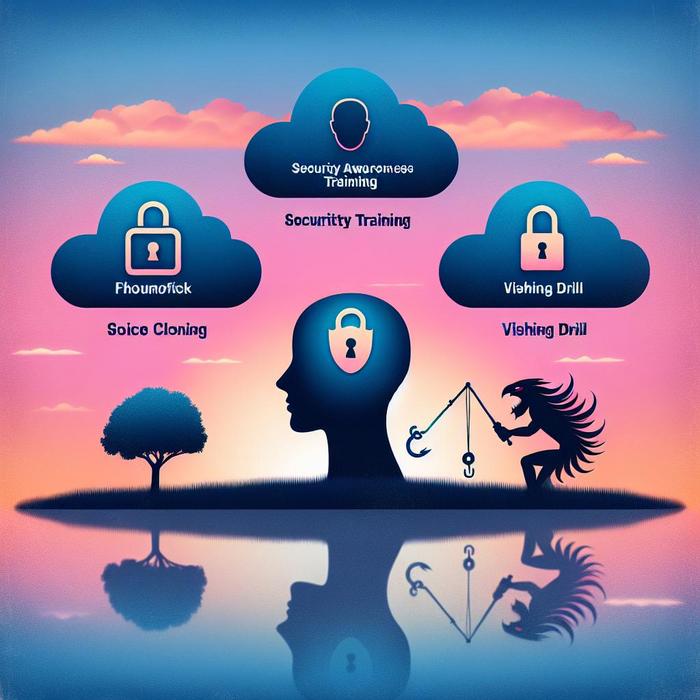
AI Voice Attack Simulations
By Madison Clarke |
Deepfake & AI DetectionSocial Engineering PreventionSecurity Awareness & Training
Unmasking the Threat of Voice Cloning with AI-Driven Identity Security Intrigued by how cybercriminals are utilizing voice cloning to launch sophisticated attacks? You’re not alone. With the rise of artificial intelligence, security concerns have evolved
Read more
Post-Truth Cybersecurity Era
The Imperative of Real-Time Identity Verification Are we prepared to confront the sophisticated social engineering threats posed by AI-driven identity theft? With digital becomes more complex, organizations must address not just the technology behind cyber
Read more
Government Impersonation Fraud
Understanding the Growing Threat of Government Impersonation Fraud Have you ever wondered how cybercriminals create panic and exploit digital vulnerabilities? Government impersonation fraud is one of the many sophisticated techniques used. This form of fraud,
Read more
Beyond Knowledge-Based Auth
f Proactive Measures Against AI-Driven Deception How can organizations outpace malicious AI solutions effectively? Evolving digital threats is more intimidating than ever. With cybercriminals adopt sophisticated methodologies—like deepfake technologies and social engineering attacks—businesses face mounting
Read more
Enterprise Identity Orchestration
Harnessing the Power of Identity Workflow Automation How secure do you feel about your organization’s identity verification processes? Orchestrating identity verification (IDV) is no longer a luxury but a necessity for ensuring enterprise security. While
Read more
Seamless IDV Integration
Understanding the New Age of Identity Verification How can organizations ensure trust and security in their digital interactions? Organizations face unique challenges in maintaining secure and frictionless verification processes. The rise of AI-driven deepfake and
Read more
Financial ATO Prevention
Confronting the Threat: AI-Driven Identity Security in Financial Services Are you confident that your financial institution’s defenses are equipped to handle the sophisticated threats posed by AI-driven deepfake and social engineering attacks? Safeguarding against these
Read more
Crypto Exchange Impersonation
The Rise of Crypto Exchange Impersonation Threats Have you ever considered the devastating potential of deceptive practices in digital currency? The threats of crypto exchange impersonation are not just confined to your typical phishing emails
Read more
Impersonation in Legal Sector
The Growing Threat of Legal Document Fraud and Lawyer Impersonation How can organizations in mission-critical sectors like the legal industry protect themselves from evolving threats such as legal document fraud and lawyer impersonation? With the
Read moreContent on the Impersonation Prevention Community is created by guest contributors and is provided as community-generated material, not official company communication or endorsement. While we attempt to review submissions, we do not guarantee their accuracy and are not responsible for the opinions expressed. Readers should independently verify all information.